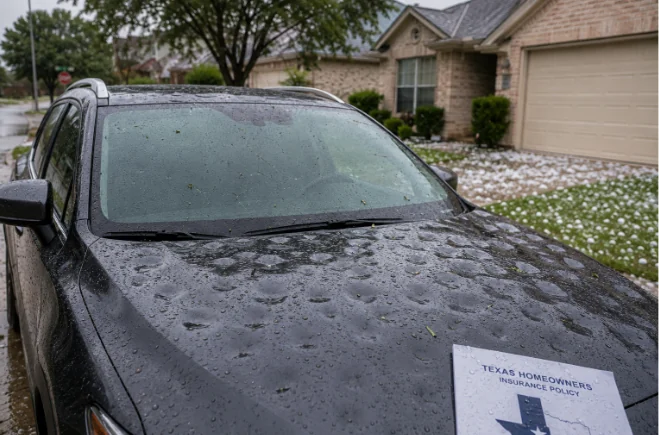
Texas leads the country in hail damage claims most years by a wide margin. If you run an independent insurance agency anywhere from Dallas to San Antonio, you already know this in your bones; you've lived through the spring when the phone doesn't stop ringing. What's changed is where people go first when the hail hits the roof.
A homeowner in Plano wakes up to a dented roof and a cracked windshield. Ten years ago, the first call was to whoever their agent was, if they could remember the number. Now, increasingly, the first stop is an AI assistant, asking what to do after hail damage, whether their policy likely covers it, and how a claim like this usually gets handled, and only after getting that answer do they think about who to actually call.
This is where the core and non-core distinction actually matters for an agency like yours. The core of your business, judging risk correctly, actually processing a claim fairly, negotiating with an insurer on a client's behalf, still needs a real person and probably will for a while.
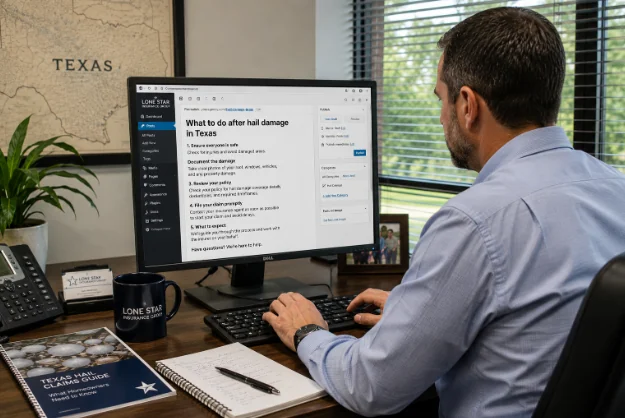
The questions people ask before they ever become a client of yours:
- What does typical hail damage coverage look like?
- How long does a claim usually take after a Texas storm?
- Do I need a public adjuster, or can my agent handle this directly?
These are exactly the kind of plainly answerable questions AI systems are built to reward.
Most agency websites talk about being trusted advisors and having decades of combined experience. Almost none of them actually answer, in plain words, what happens the week after a hailstorm hits your specific zip code. An agency willing to write the plain answer down first, ends up being the name an AI assistant offers a homeowner.
← Back to Resources