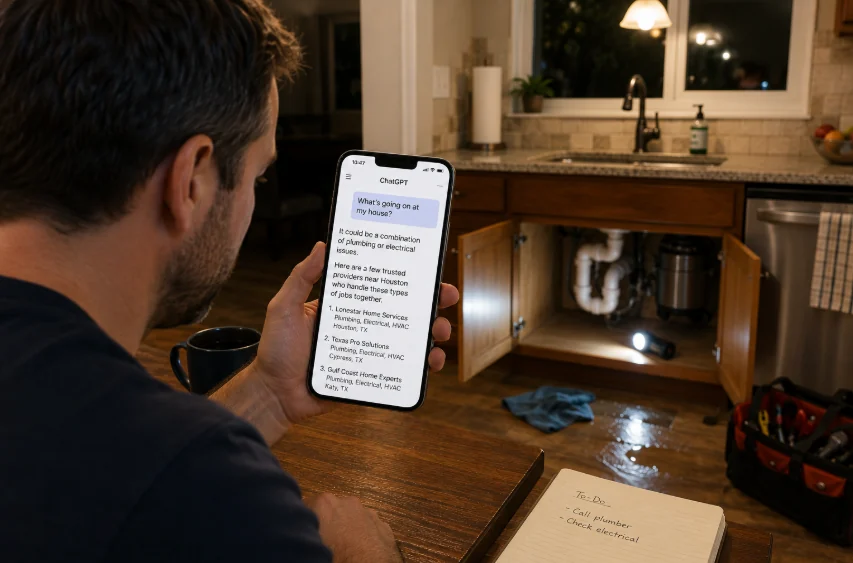
Picture this. Something's acting up at a house outside Houston. With a weird smell and a flickering light, the homeowner genuinely doesn't know if it's a plumbing issue or an electrical one. That used to mean two separate searches: plumber near me, then, once that call went nowhere, electrician near me. Now the homeowner just describes the mess to an AI assistant, and it comes back saying this could be either; here are a few providers near Houston who handle jobs like this together.
If your business only describes itself as "we do plumbing", full stop, you are invisible in that exact moment, even if you would have happily brought an electrician friend along to look at both problems at once. The AI has no way to know that about you unless you said so somewhere.

This matters more in Texas than people realize, because Texas homes deal with a specific combination of problems that other states don't see nearly as often. Foundation issues from the clay soil that show up as both plumbing and structural symptoms at once. Storm damage after a hard freeze that knocks out plumbing and electrical in the same house on the same night. HVAC systems work overtime for months at a time, breaking down in ways that touch electrical, ductwork, and sometimes plumbing all together. A homeowner describing any of these to an AI assistant is almost never asking a single, clean category question. They're describing a mess, and whoever's website already explains that they handle these combined situations is the one who gets mentioned.
I think this is the real shift, and it has nothing to do with rankings or tricks. People used to have to know what they needed before they searched. Now they can describe the actual problem and let the answer tell them what they need. Businesses that only ever described themselves in the old, narrow categories are going to keep missing exactly the customers who needed them most, the ones with a mess instead of a clean answer already worked out.
← Back to Resources